Baby bunny! (Amigurumi)

It’s after Christmas, so you’d think by now I’d be digging out the photos of all the projects that became christmas presents. But no, I’m going to dig back a little further to one I forgot from this summer…

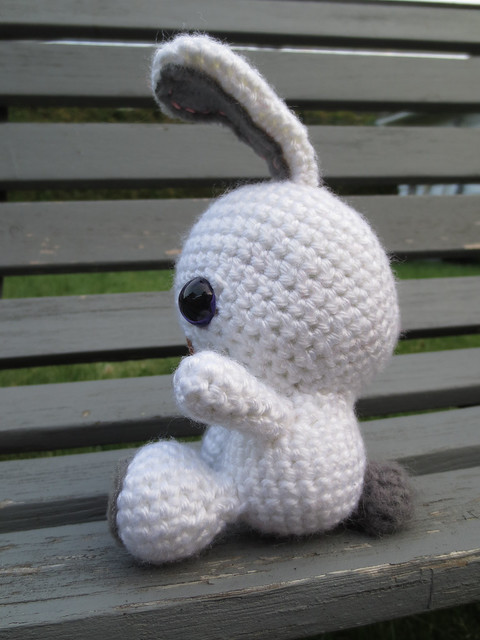
This little amigurumi bunny was just so charming that I decided to make her for baby V:

Baby bunny for V

My favourite part is the little mohair fluffy grey tail:

20130722-IMG_0277.jpg

This is a pattern where the details really matter, so while finishing the bunny body didn’t take very long (I think I finished most of her in an afternoon at Quelab), getting her nose and ears sewn just so took me a while. Despite the little bit of fussiness, I think this is my favourite bunny pattern yet, and maybe sometime I’ll make another with more patterned fabric as the original pattern suggests.

The pattern is free on Ravelry: Crochet Spring Bunny by Stephanie Jessica Lau

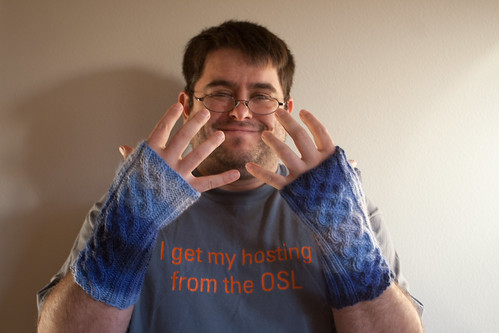
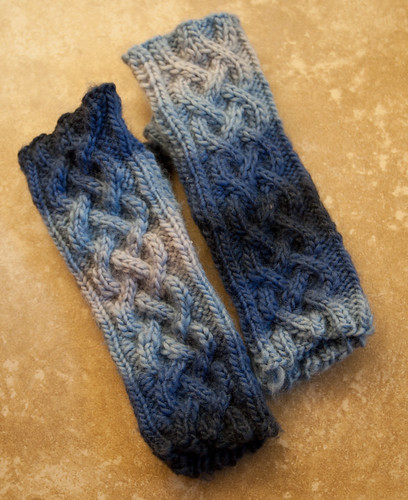
Warthog9’s blue gloves

John and I have been playing an augmented reality game called Ingress for some time. The reason this is relevant to this post is twofold:

1. We spend a lot of time walking around outside in the cold using our smart phones
2. We’re on the blue team.

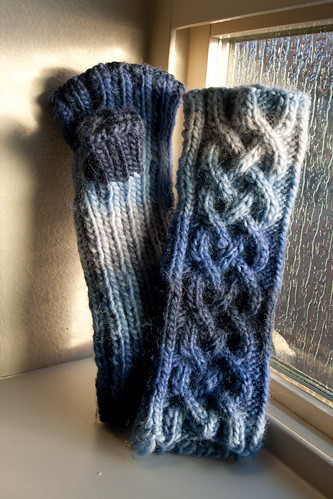
I have some lovely purple gloves I made myself ages ago that I use for being out and about, but John couldn’t find his “hobo gloves” (aka smoker’s gloves, aka convertible mitt-glove things) in the chaos of our move, so I set about making him some new ones. Of course, he totally found the hobo gloves before I finished (by *hours* I might add. I was so close!) but in the rainy northwest, I expect having more than one set of gloves is advised.

John's blue gloves

The pattern is Twisty Sister Cabled Handwarmers
by Kate Gondwana
. I was drawn to the nice cable pattern on the back:

John's blue gloves

Since John has wide but not very long hands and likely would just be annoyed by longer gloves going well under his long coat sleeves, I used the “large” size guidelines but took out a repeat so that they’re a bit shorter, as recommended in the pattern as a way to adjust. Horray for well-written patterns! I particularly liked that this one had both charts *and* written instructions, as while I prefer charts sometimes I find it easier to understand the written if I’m not sure where something should start.

John's blue gloves

And finally, since someone complained that I didn’t have any pictures of people wearing the fox hat of my last post, here’s a few more pictures of John:

In this one, he is telling me that I need to photoshop in some Wolverine claws for appropriate effect. I leave this as an exercise to the reader.
John's blue gloves

And in this one, I think he looks amazed that he has fingers. Let it never be said that he’s too jaded to enjoy the mysteries of the universe!
John's blue gloves

PS – In case you were also wondering about the dearth of baby photos in the last post (a) the hat was waaaaay too big so I don’t think she’ll be trying it on for a while yet unless daddy decides hilarious oversized hat would make for adorable photos (b) baby V’s parents have been sharing photos of her with select family and friends, not the entire internet, so there may not be photos of her available to the rest of you even when she grows into it, unless she grows up to want to share them herself much much later. Sorry! My sister put on the hat (to see if it really fit a small adult) and says if we find that photo I can put that up instead.

Little Fox Tail

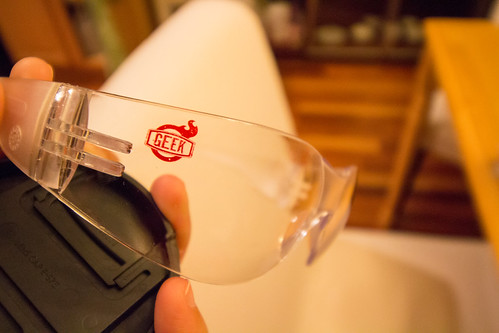
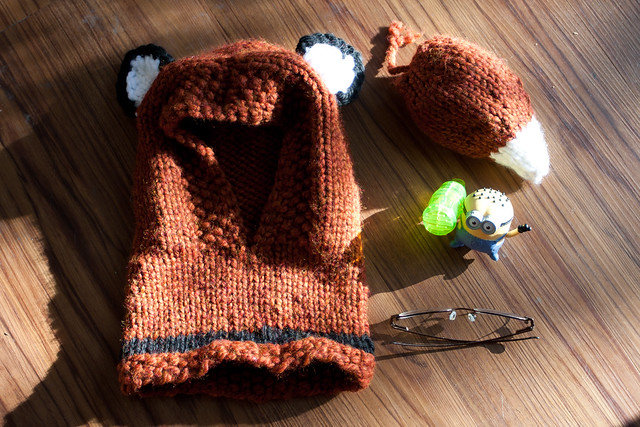
When my friend K announced that he and his wife were expecting their first child, I threatened to make an inordinate number of animal hats for the kid. The first of these turned out to be a Failynn Fox Cowl, which while adorable, is also much too big for a newborn no matter what the pattern said. See the picture? Those are my full-sized adult glasses. In a pinch, I could wear this hat, and while I’m a smaller adult, I’m not that tiny.

Failynn Fox Cowl + Fox Tail

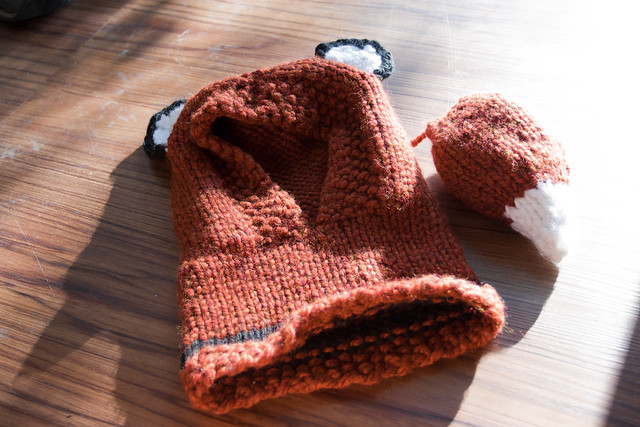
In for a penny in for a pound: I figured if it wasn’t going to be a newborn sized present, I should make it more toddler-friendly an add a tail so it could be more of a costume. Unfortunately, there weren’t any tail patterns around that matched what I wanted, so I had to make my own.

Toddler Friendly Tail

Little Fox Tail

– Extra Bulky Yarn in two colours (I used orange and white)
– 9mm needles, either two circulars or a set of DPNs

Row 0: Cast on 16 and join ends, being careful not to twist
(I cast 8 on each circular, but whatever works for you.)
Row 1-2: k16 (all the way around)
3: {k1, increase, k3} 4 times (20)
4: k20 (all the way around)
5: {k1, increase, k2} 6 times, k2 (26)
6-11: k26 (all the way around)
12: {k2tog, k3} 6 times, k2 (22)
13: k26 (all the way around)
14: {k2tog, k9} 2 times (20)
15: k20 (all the way around)
16 {k2tog, k4} 4 times (16)
17: Change to second colour (white in my case), k16
18: {k2tog, k3} 4 times (12)
19: k12
20: {k2tog, k2} 4 times (8)
21: k8
22: {k2tog, k1} 4 times (4)
tie off to make a nice little point on the tail

I also made a seed stitch belt to attach the tail to, but for some reason I never took a picture of that. It’ll be a while before baby V gets big enough to want to play with this, but hopefully it’ll be fun when she grows into it!

Failynn Fox Cowl + Toddler Tail

Brownie in a Mug (or Chocolate Lava Cake in a Mug)

My sister introduced me to this brownie in a mug recipe because she is the bestest sister ever. I tried it out today and it’s everything I imagined, even if I did it “wrong.”

Here’s some pictures:

Almost everything you need for brownie in a mug

Almost everything you need for brownie in a mug

That’s everything you need for brownie in the mug, well, almost:

1/4 cup flour
1/4 cup sugar
2 Tbsp cocoa
Pinch of salt (not pictured ’cause I usually don’t bother with it)
Pinch of cinnamon (original calls for a tiny pinch but I was a lot more generous.)
1/4 cup water
2 Tbsp oil (not strong flavoured, according to the original recipe)
1 to 2 drops vanilla extract

Basically, put it in the mug and mix, then stick the whole thing in the microwave.

I mixed the dry up first, since my sugar is pretty lumpy at the moment (apparently no one ever told my boyfriend that one must actually keep the sugar container sealed…).

Mixing the dry ingredients

Mixing the dry ingredients

Then added the wet. If you’re like me and use a pipette to handle “1 or 2 drops” lest there be a vanilla disaster (yummy but expensive), you can rinse it out using the water that’s going into the cupcakes anyhow.

Rising out the pipette

Rising out the pipette

And mix. Bubble bubble, toil and trouble, eh?

Bubbling uncooked mug o' brownie

Bubbling uncooked mug o’ brownie

Since there’s no egg in this recipe, you can lick the spoon (well, fork in my case). This is a good way to test if the pinch of cinnamon was really enough. In my case, it was, but I’m thinking next time it’ll be cinnamon and cayenne for a mexican mug o’ brownie. Can take the gal out of New Mexico, but you can’t take the New Mexico out of the gal, eh?

So from there, you stick it in the microwave and cook it. The original recipe says 1 min 40 sec worked for them. I decided to try 40s to start (since my new microwave is huge) and got this:

Partially cooked brownie in a mug

Partially cooked brownie in a mug

Now if I was sensible, I’d have put it back in and finished “baking” my brownie in the mug. But instead, I thought, “hey, there’s no egg, and that looks like it’d be delicious…”

And thus was born “chocolate lava cake in a mug”

Chocolate lava cake in a mug

Chocolate lava cake in a mug

Warning: even at 40s cook time, this was crazy hot. So hot that I wrote most of this post waiting for it to cool.

Now, while this brownie/lava cake was everything I wanted right now, I’m apparently not capable of making anything without contemplating ways to make it different, so here’s a list…

Other things I’d like to try:

There’s no reason you have to stick with vanilla extract. I’m going to try a few others since I have them: mint, cherry, banana, maybe root beer since it’s one of the many extracts we have in the house.

As I said, I think this would be really excellent with a bit of cayenne to make a Mexican-style chocolate. I’ll bet it’d be nice with a bit of ground ginger, too.

Chopped peanuts (or other nuts) would probably be amazing on top. Why not make a whole sundae out of it? The original recipe recommends ice cream, even if I didn’t have any on hand, having just moved. I bet sprinkles would be fun if you’re doing it with kids, just don’t add them ’till after the brownie is cooked.

Chocolate chips might work in the mix. I’m worried it might be overkill, but there are days where overkill chocolate brownie sounds like exactly what I need.

Finally, my sister had warned me, and she’s right: this makes about twice as much brownie as I actually want. So next time, I’ll also be cutting the recipe in half. For reference, here’s what my next attempt will look like:

Small brownie in a mug

2 Tbsp flour
2 Tbsp sugar
1 Tbsp cocoa
Pinch of salt
Pinch of spice (cinnamon, cinnamon+cayenne, ginger, etc. Optional.)
2 Tbsp water
1 Tbsp oil (canola or veggie oil, not olive)
1 to 2 drops extract (vanilla, cherry, whatever)

Cook time will decrease accordingly.

My Little Robot

A number of weeks back, it occurred to me that as an adult with disposable income, I could buy a robot anytime I wanted to. So I did. Or rather, I bought a kit to build my own robot. I haven’t had as much time to play with as I’d like (the downside to being an adult with a job), but I’m hoping to take it out to Albuquerque Mini Maker Faire this weekend, so I’ve been experimenting with programs to show it off.

Here’s a video:

Cute, eh? That was just me making sure that the sensor “whiskers” work, but it’s kind of a convenient program because I don’t have to worry about it falling off the table. Right now, I know how to make it flash lights, move the wheels, and make noise with the little speaker on top, so either I should make a box for it to play in and teach it to do basic collision avoidance, or maybe work on a program where people can touch it and have it react, much like the one it’s running now. I’ve only got a couple of days to finish: Maker Faire is the 24th and 25th!

A passel of penguins

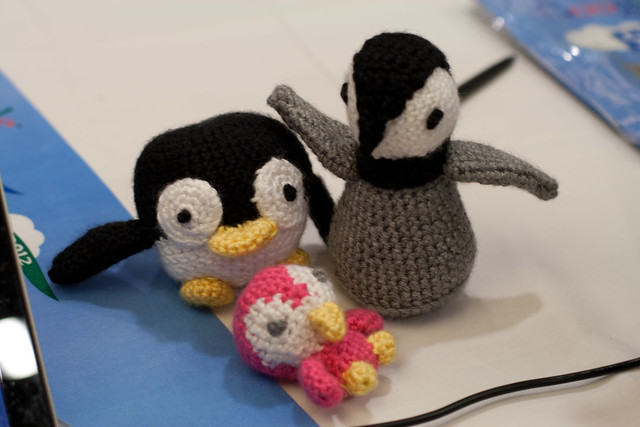
Last year at Pycon, I made a bunch of teensy amigurumi penguins to give to the friends who were sprinting on GNU Mailman with me. (Small round penguin ball pattern here) Florian commented some time later that he nearly didn’t get to keep his, as his wife is a huge fan of penguins, so since he had a new baby at home by the time of the next PyCon, I figured I knew what I should be doing: making a small pile of penguins for his family.

Amigurumi Penguins

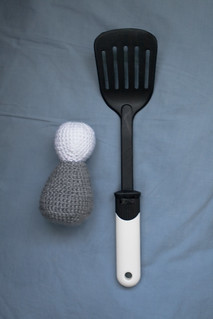
The emphasis was indeed on small since Florian would have to fit them in his suitcase for an international flight but not too small, since they were sort of intended as baby toys. Below you can see a size comparison of the largest one (in proto-penguin form) with a spatula (made unintentionally hilarious later on when the spatula was discovered lying on a pillow in the spare bedroom and questions were asked).

Penguin + Spatula

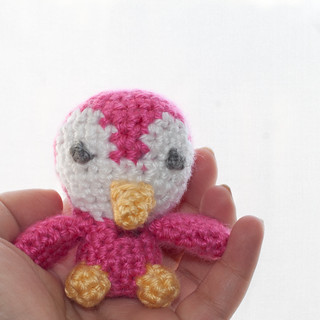
And here’s the smallest one, with my hand for size. It may help you to know that my hands are fairly small — I can just barely play a full-sized violin and would probably be more comfortable on a 3/4. (Well, okay, I haven’t actually played the violin in years, but the point is that I have almost child-sized hands.)

Amigurumi Penguin

The patterns

The big round penguin

Amigurumi Penguin by Lion Brand Yarn. I’d made this pattern before, and it’s actually what inspired my small penguin balls from last year. It’s a very easy pattern for beginner crocheters, and you can get a fair bit of expression out of adjusting the penguin’s beak and wings.

The tall penguin

Penguin Amigurumi by Tamie Oldridge. This one’s especially fun because he has a little separate hood that you place over the top ball (hence the bowling-pin shaped proto-penguin in the photo with the spatula).

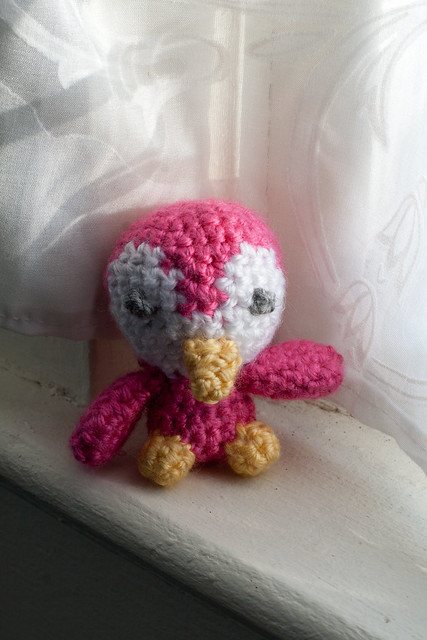
The pink penguin

Amigurumi Penguin Cell Phone Strap by Pierrot (Gosyo Co., Ltd). As you can tell from the title, this one was meant to be made with smaller yarn or cotton thread, but I scaled up so it wouldn’t be a choking hazard. People were so entertained by this one that I made a few more at the conference and gave them away too.

Here’s two pictures of one of those little wool penguins, before and after felting, with my apple power connector, watch and ring for size comparison. You can see that it didn’t get that much smaller but it definitely gets fluffier with the hand felting.

2013-03-21 00.28.082013-03-21 08.36.35

The yarns used for that one were Knit Picks palette yarns, which is one of my staples for travel since I can take small balls and a handful of stuffing and still make cute things. (If you ever feel a need to buy me hundreds of dollars of wool, you can buy a sampler pack with all the colours. I’d use them, promise!)

The felting was done by hand in the hotel using hot water from the coffee pot, a mug and shampoo from those teensy little hotel bottles. Who knew hotels contained everything you needed for hand felting? Heat water without any coffee in the machine, pour a few drops of shampoo on the penguin, dip it in the hot water, roll it around in your hands or scrub at it, rinse, repeat, replacing the water if it gets cold or too soapy.

Finally, here’s one more picture of the big pink penguin hanging out on my windowsill in Albuquerque:

Amigurumi Penguin

Leafy sweater for Baby O’Byrne

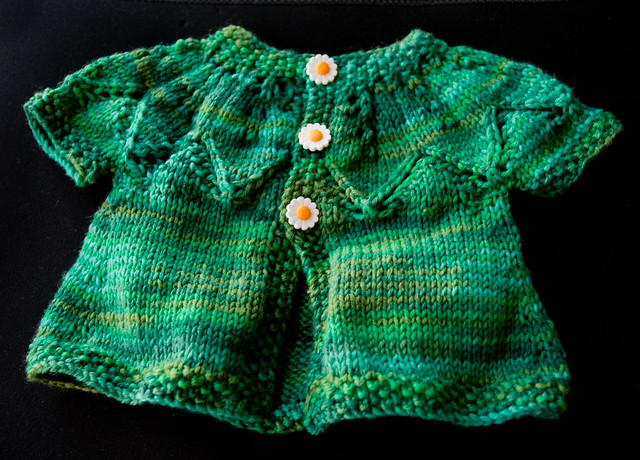
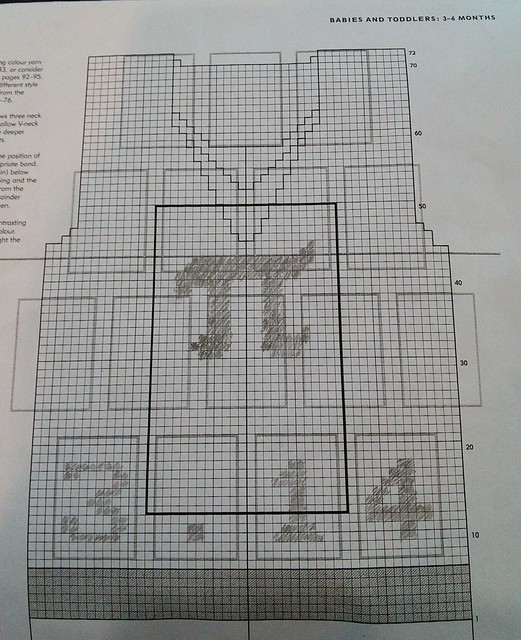
This little leafy sweater is a present for Baby O’Byrne, whose name is a secret until she makes it out into the world. She was due a few days ago as I’m writing this; I’m just waiting for the announcement of her arrival! I’ve scheduled this post to go up on May 31st, and we’ll see if she comes out before it does.
IMG_9431

I’ve been friends with Baby O’Byrne’s dad for a long time, so this sweater was made with him in mind. Ken and I have spent a great many hours hiking and camping together, so I had bought some variagated green yarn and when I saw this pattern in a book at the library, I figured I had a match.

IMG_9430

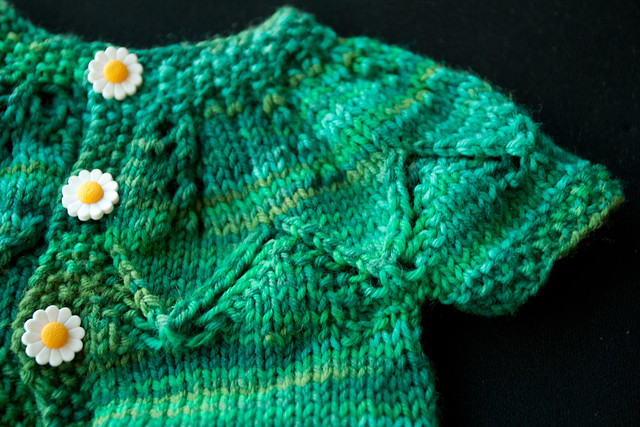
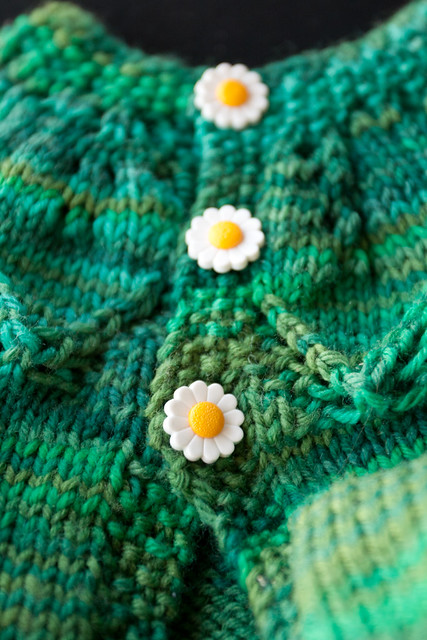
The little details of the pattern are what drew me in. I really like the leafy motif and the little seed-stitch edging is not only cute, but keeps the piece from curling up too much at the edges. Clever! And speaking of details, aren’t those buttons adorable? I bought them originally for a project of my own and had enough left over for the sweater. Here’s a close up:

IMG_9433

This isn’t the only piece I’ve made for her, but I forgot to take photos before packaging the rest up in time for the baby shower. (This one wasn’t ready in time so got sent later.) Oops! Her dad has a new camera, though, so maybe he’ll have time to take pictures of her wearing the two hats and two sets of booties I sent along before this sweater was finished. We’ll see how co-operative she is, though!

The Pattern:

Autumn Leaves by Nikki Van De Car from “What to Knit When You’re Expecting.” I really liked the book and will probably be buying my own copy rather than monopolize the library one again!

Knitted Finger Moustache

Today’s project does double-duty as both a knitting project and a photo assignment: a knitted finger moustache and a self portrait for Active Assignment Weekly.

Knitted Finger Moustache Triptych

Taken for AAW: 20 – 27 May: You look Marvelous (and Ravelry)

I found this project on Ravelry late one evening when I was trying to find errata for another pattern which was totally not working for me, and this seemed like the perfect antidote to the frustration. I was debating doing some photos with some inanimate objects like the link above shows, but I happened to check AAW and noticed today’s deadline on the self-portrait assignment for this week hadn’t hit yet, so… self-portrait time!

This being a self portrait assignment that I had an hour and a half to shoot, process and submit, it’s sans-makeup or even a hairbrush. That’s pretty much me on a lazy holiday Monday anyhow — silly knitting project, a camera, a book, and a computer.

What it took (photo-wise):

These are pretty much straight out of camera aside from stitching them together for a triptych, although I admit to photoshopping the scratch on my forehead and removing a stray hair that looked weird. I didn’t plan for a triptych or the eye thing, these just happened to be among the best of my “let’s goof off with my silly knitting project in front of my camera with a remote” shots.

Things I learned:

– Putting all the photos on one layer, moving them around, then doing image->reveal all in photoshop makes triptyches *waaaay* easier. No more figuring out canvas size!
– you can resize just one layer by using ^T in photoshop, just don’t forget to tell it when you’re done or it acts all locked.

The knitting pattern:

It’s a moustache, for your fingers! by Megan Death (It’s free!)

Lemon Googe Cupcakes (or Lubricated Lemon Cupakes, if you prefer, but you probably don’t)

I helpfully told my friend Adric that these cupcakes were my way of doing human testing without requiring IRB approval. Remember kiddies, experimental cupcakes are only one step away from mad science because my guinea pigs generally consent to the experiment!

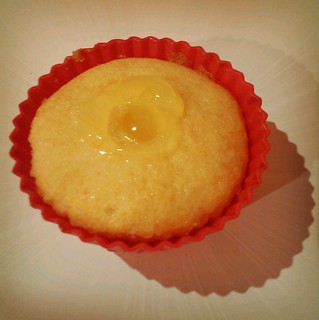
Lemon Googe Cupcake (without icing)

Figure 1: Lemon Googe Cupcake without icing. Note the “clever” use of bad filter in attempt to disguise poor quality cell phone photo, as per cultural norms in a post-instagram world

Lemon Googe Cupcakes

These come in three parts; some assembly required. I made up the recipe as a whole based on my recollection and modification of recipes in my head / recipe card box, with some inspiration from the filled cupcakes in Vegan Cupcakes Take Over the World (although this is not a vegan recipe).

Lemon Cupcake

1/4 C (4 tbsp) butter
3/4 C sugar (1/2C is probably ok for this recipe if you want to cut back)
1 egg
1 tsp vanilla
Zest from one lemon
1/2 C milk

1 tsp baking powder
1 C flour

Cream butter and sugar together; add egg, vanilla, lemon zest and milk and stir well.
Add baking powder and flour and stir until smooth (but no longer).
Spoon into cupcake liners (or I use silicone molds), filling about halfway.
We made 16 cupcakes, you might want to fill a bit higher to get 12.

Bake at 350F for 20-25 minutes (10-15 min for mini cupcakes)

Lemon Googe Filling

The name comes via my Ottawa friends: for some reason we decided that “googe” best described the texture of those little gel cup sweets that are considered to be a choking hazard in the US. This nomenclature would probably have died out, but one of my friends was severely grossed out by the word, so we have used it to describe anything of a given gooey texture ever since.

You’ll note that this is more or less a lemon pie filling recipe, omitting the egg, or a slightly gooey lemon pudding.

1/4 C cornstarch
1/2 C cold water

1 C hot water (Or less if you want thicker googe)
Juice from one lemon
3/4 C icing sugar (or adjust this to taste)

~3 drops of yellow food colouring

Mix together cornstarch and cold water, then add mixture to hot water along with lemon juice and sugar and stir well. Heat in microwave repeatedly (around 30-45s per time), stirring after each heating, until mixture is thick and no taste of cornstarch remains. You can probably nuke it longer between stirrings, but if it boils once it’s thicker it might splatter all over your microwave, so keep an eye on it. Add food colouring, because normal lemon pie filling gets its colour from egg yolk and you want people to immediately think “lemon” and not “what the heck?” as they might have if you had allowed your lovely assistant to use the blue colouring like he wanted.

If you are making mini cupcakes or just don’t plan to lose as much to taste-testing for the sugar, you can probably halve the googe recipe. Or you can allow people to dip the cupcakes in the remaining googe like some sort of weird fondue; I don’t judge.

You can add sugar after the fact if you think it needs more — it’ll dissolve, and no one minds getting a blob of icing sugar. You can’t do this with the cornstarch, though.

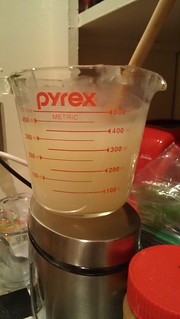
Lemon googe, prior to colouring

Figure 2: A metric ton of lemon googe, prior to colouring. (Well, ok, it’s 400ml rounded up.) This may be an excessive amount of googe for a single batch of cupakes; see experimental notes below.

Cream Cheese Icing

4 oz regular cream cheese (half a package usually. Don’t use the spreadable stuff.)
1/4 C butter
1 tsp vanilla
Around 2 C icing sugar (or however much it takes until the consistency is correct)

I suspect you’re supposed to plan ahead for this and soften the butter and cream cheese in advance, but what I do is nuke those suckers together ’till they’re practically liquid and easy to stir (around 1 min), then add vanilla and sugar ’till it’s a slightly goopy icing consistency, and let it firm up as it cools. This strategy actually does make it easier to deal with the final icing in this case, since it’s easier to spread when a bit more liquid-y, but your mileage may vary.

You could probably put some lemon in here too, but at this point that seems like overkill.

Assembly instructions

Get an icing bag with a metal or plastic tip (sorry, this is one time that cutting the corner off a plastic bag probably isn’t enough). We’ll be using this to fill the cupcakes with lemon googe.

I chose a slightly too big tip, so my googe was spilling everywhere, and the lazy “I’m not sticking my hand in there to get a new tip because our kitchen sink broke this morning” solution was:

1. Stab the icing tip into the cupcake.
2. Spoon a tablespoon or so of googe into the bag.
3. Squeeze the googe into the cupcake, trying not to go right through to the bottom
Repeat, doing 1 more quickly subsequent times because you are dripping sticky slime all over the counter.

Yeay!

I had my lovely assistant do this part so it wasn’t bad for me at all, but you might want to save yourself the trouble and not use the largest icing tip you have on hand.

Lubricated lemon cupcakes

Figure 3: Lubricated lemon cupcakes. I’m pretty sure this monkier is not going to impress the friend who hates the word googe, but it’s more alliterative so it can be the alternate recipe name. Note the tools in the background include googe, an icing bag, and a place to put the icing bag so it doesn’t googe all over the counter.

You now have a cupcake with a gooey hole in it. I will refrain from juvenile jokes, but this may be the point where you’ll be really glad you used the food colouring so your lovely assistant will not think of juvenile jokes.

Cover your googe-filled cupcakes with cream cheese icing. This will be challenging because you’re basically holding a lubricated cupcake and the icing will slide off the hole in the center. Having experimented with this, I can tell you that it is easiest to ice the outside and then cover the googe last. It’s also fun to slime the top of the cupcake and layer the icing on that, which will add extra lemony goodness but is also really messy.

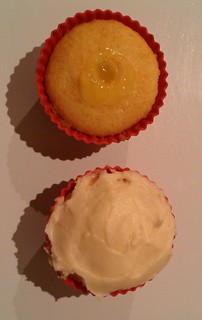
Untitled

Figure 4: Lemon googe cupcakes, partially and fully prepared

The Lemon Googe Cupcake Experiments

Hypothesis: lemon googe, if inserted into the cupcake 24h+ in advance, will suffuse the cupcake making it more delicious.

Method:
16 cupcakes were created in the initial batch.
2 were assembled and eaten immediately and declared delicious by both experimental subjects J and T.

The remaining cupcakes have been divided into two groups. Group one has been filled with googe and iced and placed in the fridge to age for 24h. After the time has elapsed, two prepared cupcakes will be removed from refrigeration and eaten by experimental subjects J and T. If they are deemed an improvement over the freshly assembled cupcakes, the rest of the batch will be prepared in a similar manner. After 48h have passed, experimental subjects will be able to compare 0-day cupcakes, 24h cupcakes, and 48h cupcakes. If the prepared cupcakes are deemed unsuitable at 24h (likely due to structural integrity failures), then the control batch will be left untouched until shortly before the 2600 meeting which will represent our larger clinical cupcake trial. This will not be a double-blinded experiment, although one could be conducted at a later date to more comprehensively test cupcake saturation over time.

Hypothesis 2: 400ml is way to much googe

Method: 400ml of googe solution has been prepared and will be inserted into cupcakes as described above. If the cupcakes cannot hold this amount of googe, the remainder will be given to the experimental subjects for consumption or further experimentation. We will report back on crowdsourced solutions for too much googe after the clinical trials are complete.

Cupcake Clinical Trial

If you wish to participate in this clinical cupcake trial, please attend the 2600 meeting at Quelab on Friday April 5, 2013. Please note that I have not obtained ethics approval for this experiment and you will be participating at your own risk.

A Moose for George

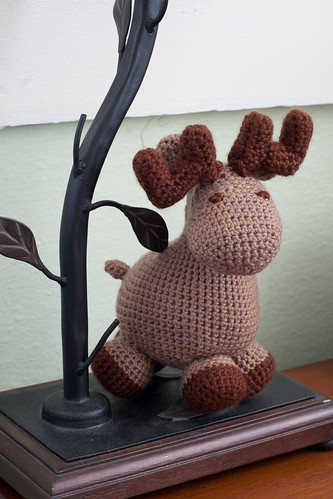
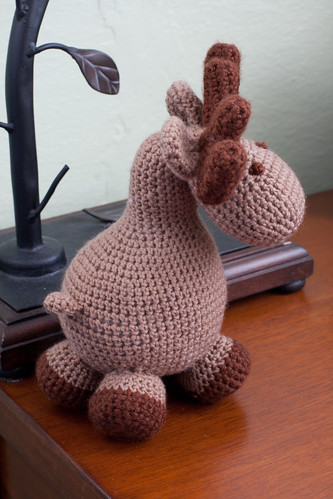
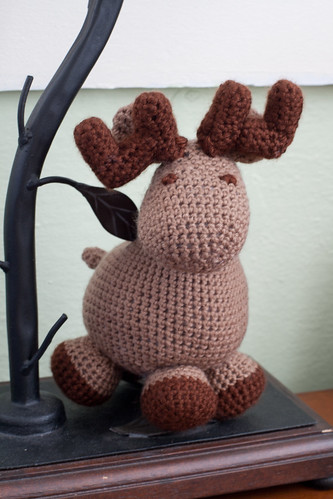
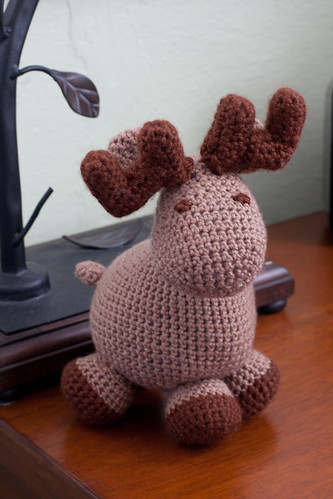
My colleague George is from the lovely tree-filled part of the west coast and went to UBC for his undergrad. For some reason, this meant that when he and his wife announced they were expecting, I thought “Hey, I should make a moose for George!” And so I did, but I wound up making a new pattern to do it, so here it is!

Moose for George

I’m a big fan of Ravelry, an excellent site for knitters and crocheters that provides a huge repository of patterns, so that was the first place I looked for moose patterns. But for some reason when I searched for moose none of the patterns really looked like what I had in mind.

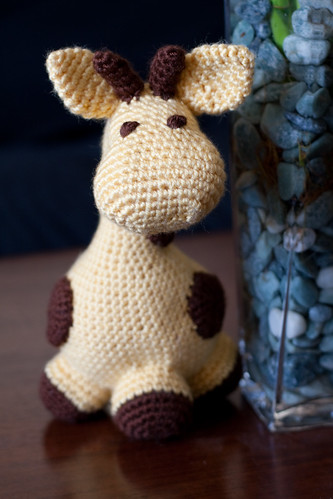
Eventually, I realized why. What I wanted was a Moose version of the giraffe I’d made for another colleague at UNM:

Crochet Giraffe

Look familiar? Having established the what I wanted to see, it wasn’t too hard to go and adjust the pattern to make a moose!

And now, on to the instructions!

The original pattern

Gigi Giraffe — It’s free and nicely written. If you’re not set on a moose, I highly recommend just doing this pattern as it is! It’s so cute!

Two more pictures of the giraffe I made for another colleague: here and here

My moose-y modifications

Obviously the largest one is in swapping out the yellow for light brown (the dark brown for the hooves is actually the same as the one I used for the giraffe).

The neck

The next is the neck: I shortened it considerably. I forget exactly how many rows I did, but it was probably somewhere around 5 compared to the 17 repeats in the original pattern. You can maybe even count the repeats in this picture if you’re desperate to duplicate my moose exactly:

Moose for George

You’ll note also that I sewed the neck on a little funny. This was intentional! Moose are funny, humpbacked kind of creatures and this was my way of making a nod to the “yeah, I know what a moose looks like” while still going for something chibi-cutesy in true amigurumi form.

The antlers

The antlers obviously didn’t come from any modification of the pattern. Let’s look at them again:

Moose for George

They’re made in 3 pieces that all start like this:

Row 0: Magic circle (6 stitches)
Row 2: {increase (2sc in one stitch), 1sc} repeated 3 times (9 stitches)
Row 3-?: sc around (9 stitches)

Basically, make one short antler tube for the end piece (probably around 5 rows long), a longer one for the part that comes out of his head (around 9 rows), and one to attach the two together (again, around 9 rows). If you want him to be an older moose with a more impressive rack, make the joiner piece longer and add extra antler bumps on top. Stuff each tube relatively firmly and sew together.

Tail

The tail is also brand new and not part of the original pattern. I crocheted a little circular-ish piece and sewed one end to a bit of a point, then sewed the other onto the moose’s bum. The pattern was probably something like this:

Row 0: Magic circle (6 stitches)
Row 2: increase (2sc in one stitch) repeated 6 times (12 stitches)

It’s possible that I only went to 9 like I did with the antlers, though.

So in conclusion…

If you, like me, are making this for a baby, remember to sew things on really well, and tie extra knots as you go. Smaller pieces like the tail could be dangerous if removed and swallowed, and kids are tenacious. That said, crochet tends to tighten up into horrible knots when drooled on and pulled on, so it’s pretty safe to give to kids. And I should know: my grandmother made me a lot of crocheted things, and I seem to have flourished and “inherited” some of her talent for making new patterns on the fly. Clearly this means crocheted gifts are a way to foster creative adults, right?

Happy moose-making!

Moose for George

PS – For my records, this moose was finished ~ March 7, 2013. My next set of works in progress is also a gift, but the recipient gets the pile o’ projects at PyCon, so you can expect a post about that when it’s been received!

Plants vs Zombies Sunflower Plushie

Welcome to Dr. Terri’s maker blog! Since you can just read the about page to find out what’s going on here, I’m going to skip ahead to the part where I show you something I made: A plush Plants vs Zombies sunflower!

Dr. Terri's Plants vs Zombies Sunflower

John’s father is a huge Plants vs Zombies fan, and when I went to visit for thanksgiving I was highly amused by how much time he spent playing. I thought he might get a kick out of having a sunflower plushie so sit on his desk. I could have bought one, but there didn’t seem to be any in stock that were a nice small desk size, so I bought some polar fleece and set about making a pattern:

Dr. Terri's Plants vs Zombies Sunflower with "pattern"

As you can tell, my pattern isn’t exactly complex: draw a big oval for the face, petal-like shapes for the petals, and leaf-like shapes for the leaves.

Petals

I sewed little pockets to make petals, then ran a line down the centre to make them look right. There’s no stuffing in those because my fleece was thick enough and it would have made sewing them to the face really annoying. I purposely didn’t make them identical because I thought a little bit of wonkiness would look more right.

Face

I hand-drew some eyes and mouth and appliqued mine on by hand. You could easily embroider this instead (and I think that’s what they do with the licensed plushies).

Leaves

Like the petals, these are sewn as pockets with a line in the middle. You could probably put stuffing in these without making your life too hard, but I didn’t bother. Leave the pocket opening at the base of the leaf so you can just tuck the ends in and sew it to the stem.

Stem

The stem is just a tube of green. I filled it with a pair of twisted-together and folded-over pipecleaners to get it to stay up. Make sure to leave a big loop of pipecleaner at the top for sewing into the head if you want it to stay up without flopping over. If you want the sunflower to be able to stand up on its own, make the stem fairly long so you can curl it around underneath to make a base.
Dr. Terri's Plants vs Zombies Sunflower

Assembling

Put the two head pieces face together and arrange the petals sticking in with the pocket ends out and sew around the side, leaving a large chunk of space at the bottom and 1-2 petals to fill it in. You can’t see the back of the head in my photos, but it’s just a second brown circle — you could use another colour if desired. Be careful not to overlap the petals (that much fleece is a pain to sew through) or horrifically mis-angle them, although again, some wonkiness is a-ok.

Turn the whole head right-side-out. Insert the pipecleaner loop in and adjust it to suit you, then add some stuffing. Stick your missing petals in and sew through them and the stem. (I did this by hand because it’s awkward to pin and a bit dangerous to stab your sewing machine needle into wrapped wires.)

Sew leaves onto stem. In my case, I sewed them halfway up and then bent the remaining stem in a curl so that the sunflower could stand on its own (or perhaps be wrapped around something).
Dr. Terri's Plants vs Zombies Sunflower in bucket

I really wanted a flowerpot for this so that it could look like a roof-level plant, but we couldn’t find a sufficiently small one since I made this in November and even in the sunny southwest, that’s not really a great time to find flower pots. However, I did find a tiny craft tin bucket, so that’s what I used. The bucket is about 2 inches tall, to give you an idea. The sunflower made its way to its new home in time for his Ayyám-i-Há celebration a few weeks ago, so I figure it’s safe to share the pictures with the world now.

Enjoy!

Gallery of Plants vs Zombie Sunflower Photos